Overview
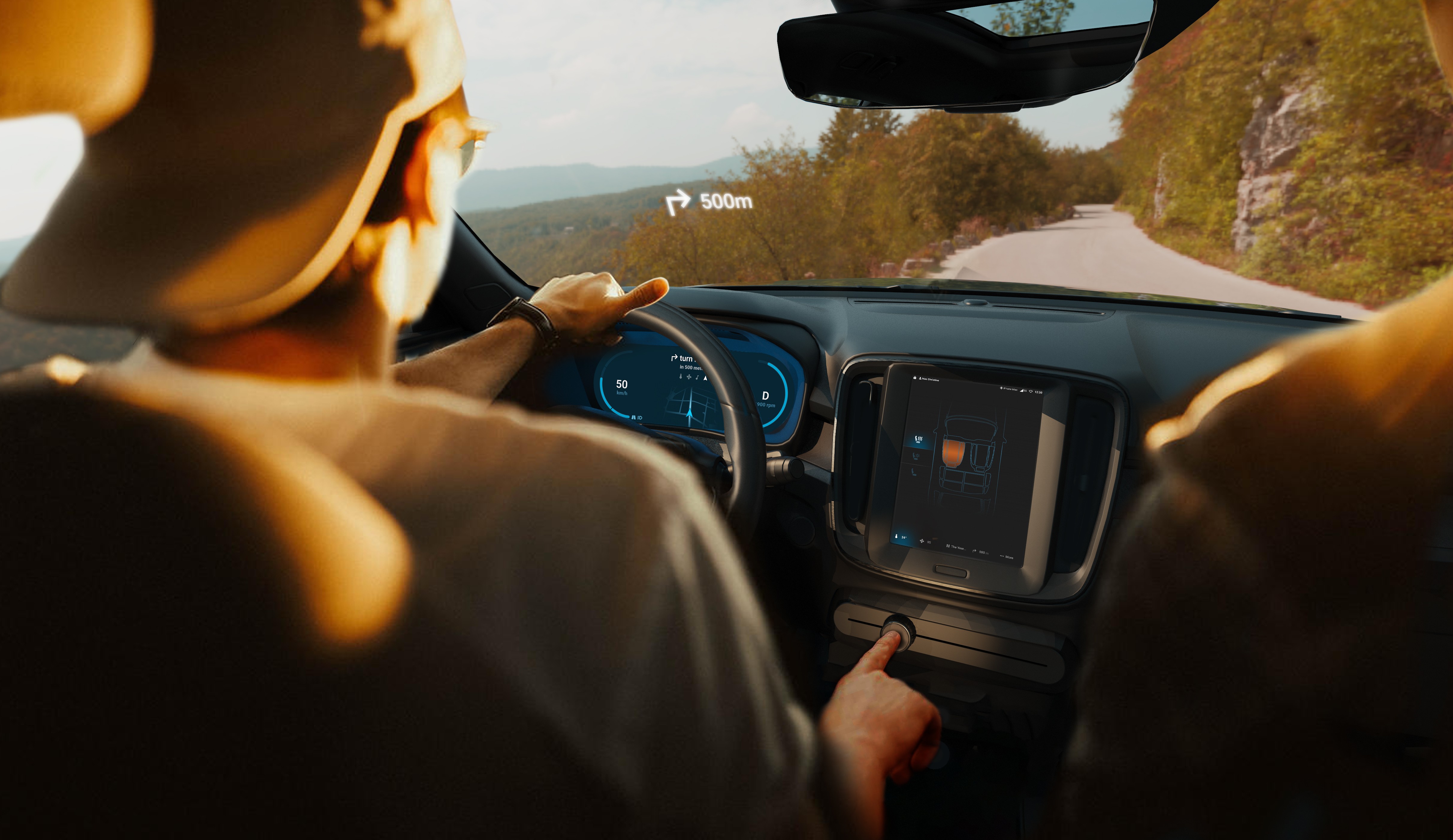
Increased advancements in car interfaces and technology improve and enhance driving experience. However, the lack of naturalness in car-driver interaction seems to fade away as the operations within the car context are more complex and less barrier-free. Increment of the overload of controls affects the driver’s cognitive ability and distracts them from their primary task: driving.
Challenge
How might we enable contextual interactions to reduce the cognitive burden of drivers while maintaining the feeling of control?
Role
UX Research, UI design, prototyping, interaction testing, designing a driving simulator
Tools
Figma
Project Collaborators
7 group members
Year
2022
Methodology
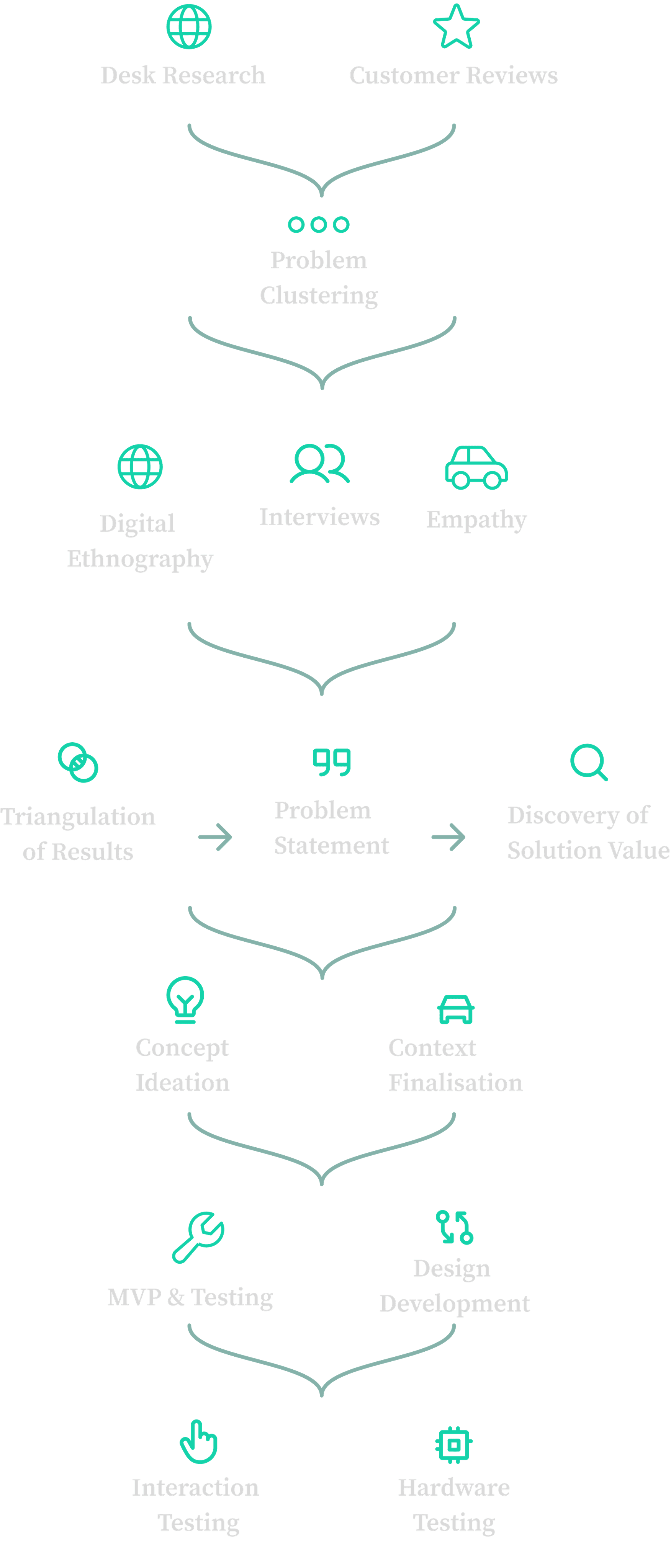
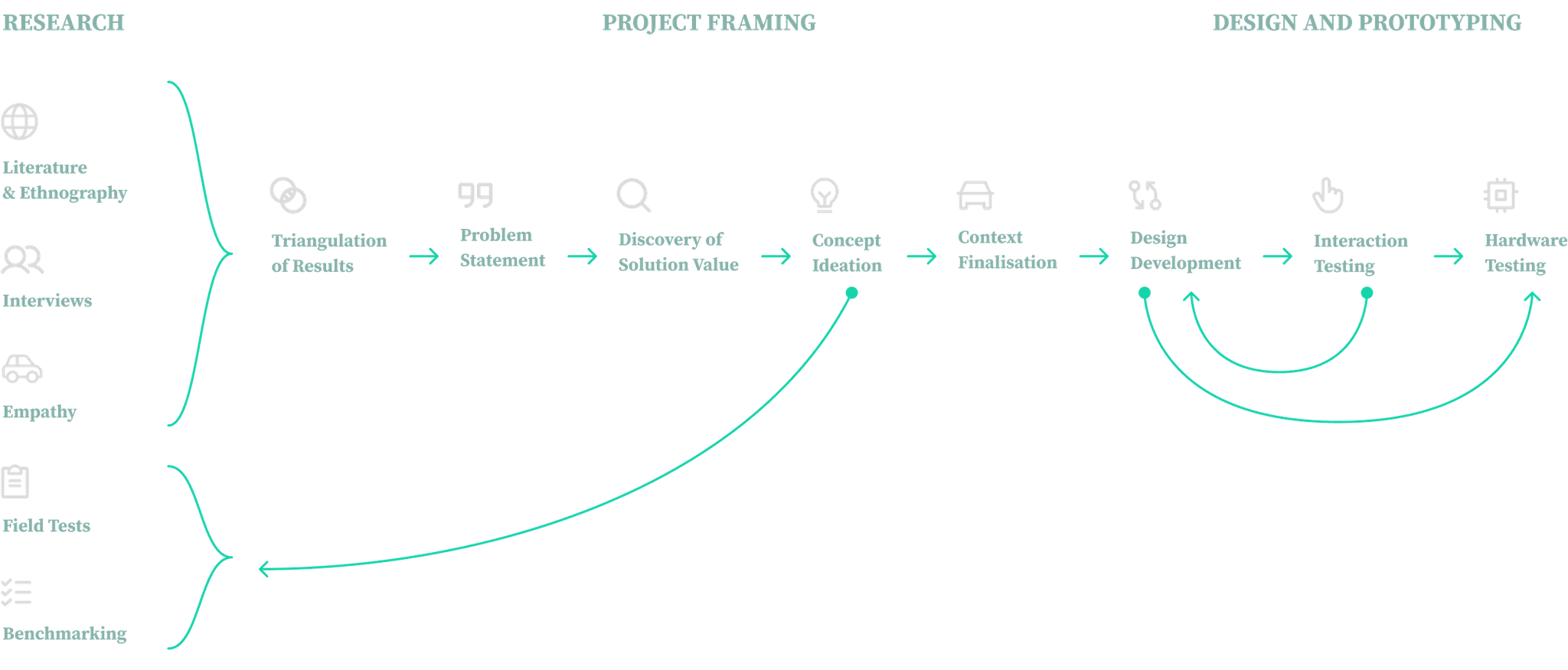
A convergent mixed with divergent process so far where we have been able to identify user needs, pains and values required to to address these in our proposed solution.
What is Horizon?
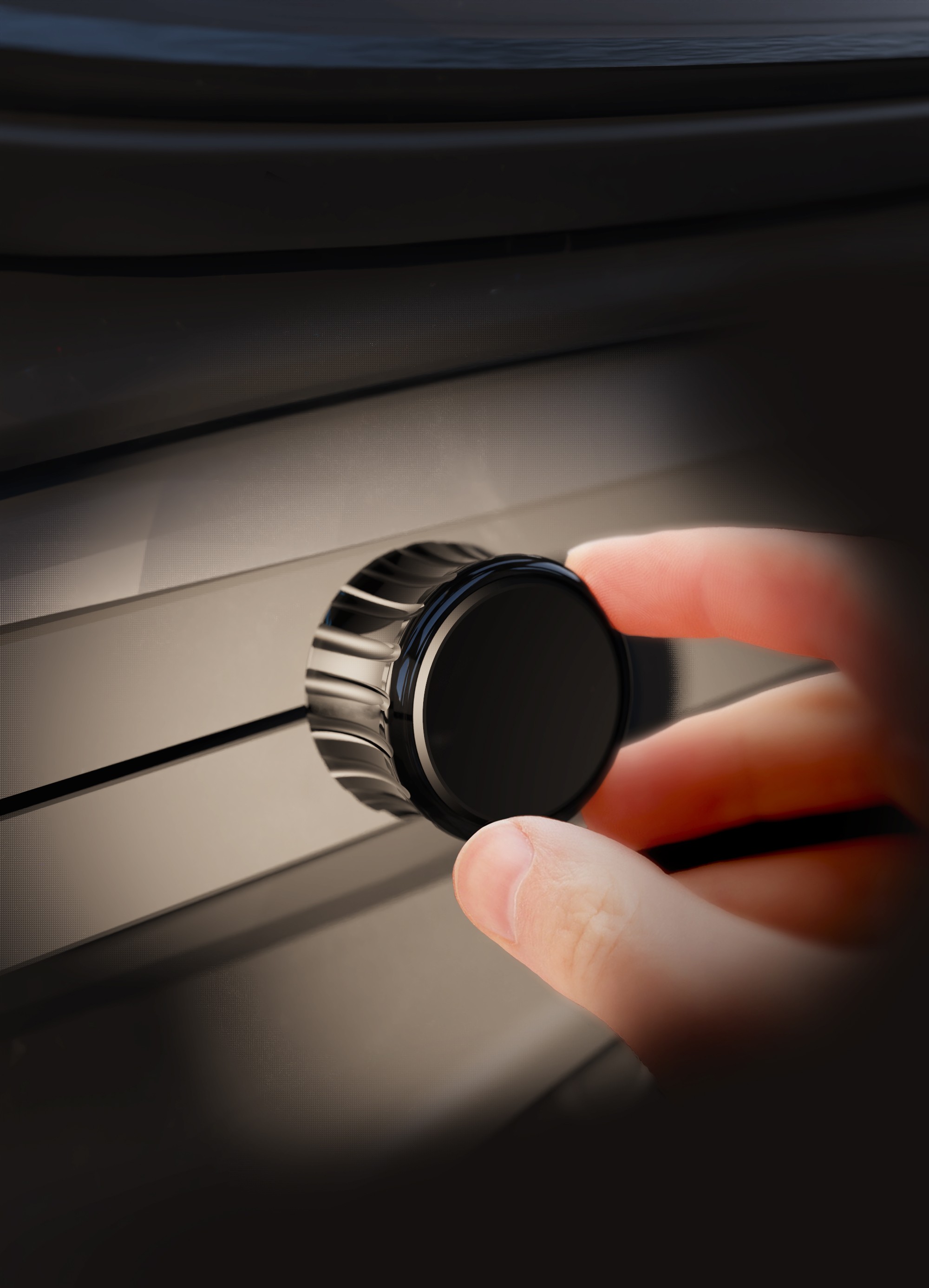
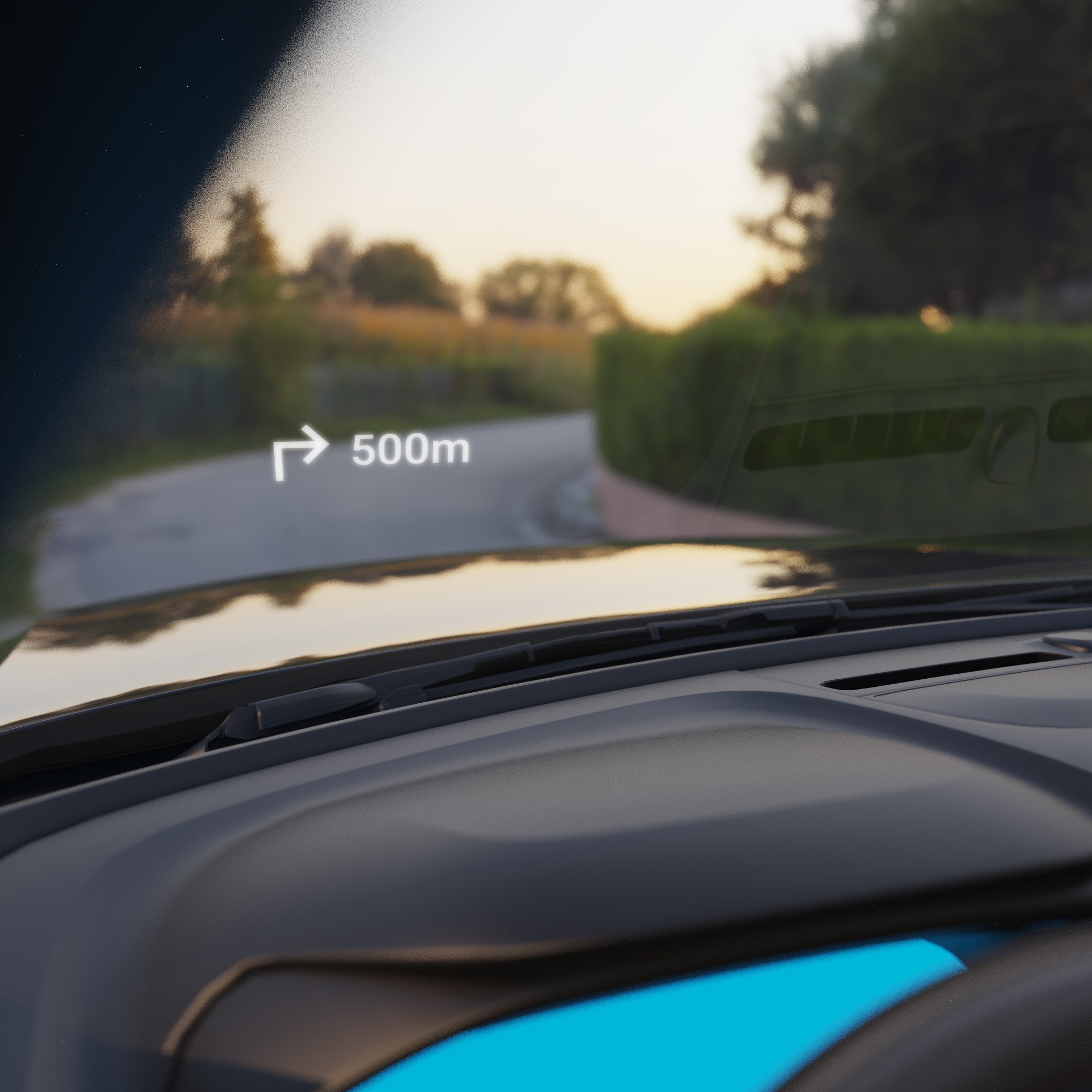
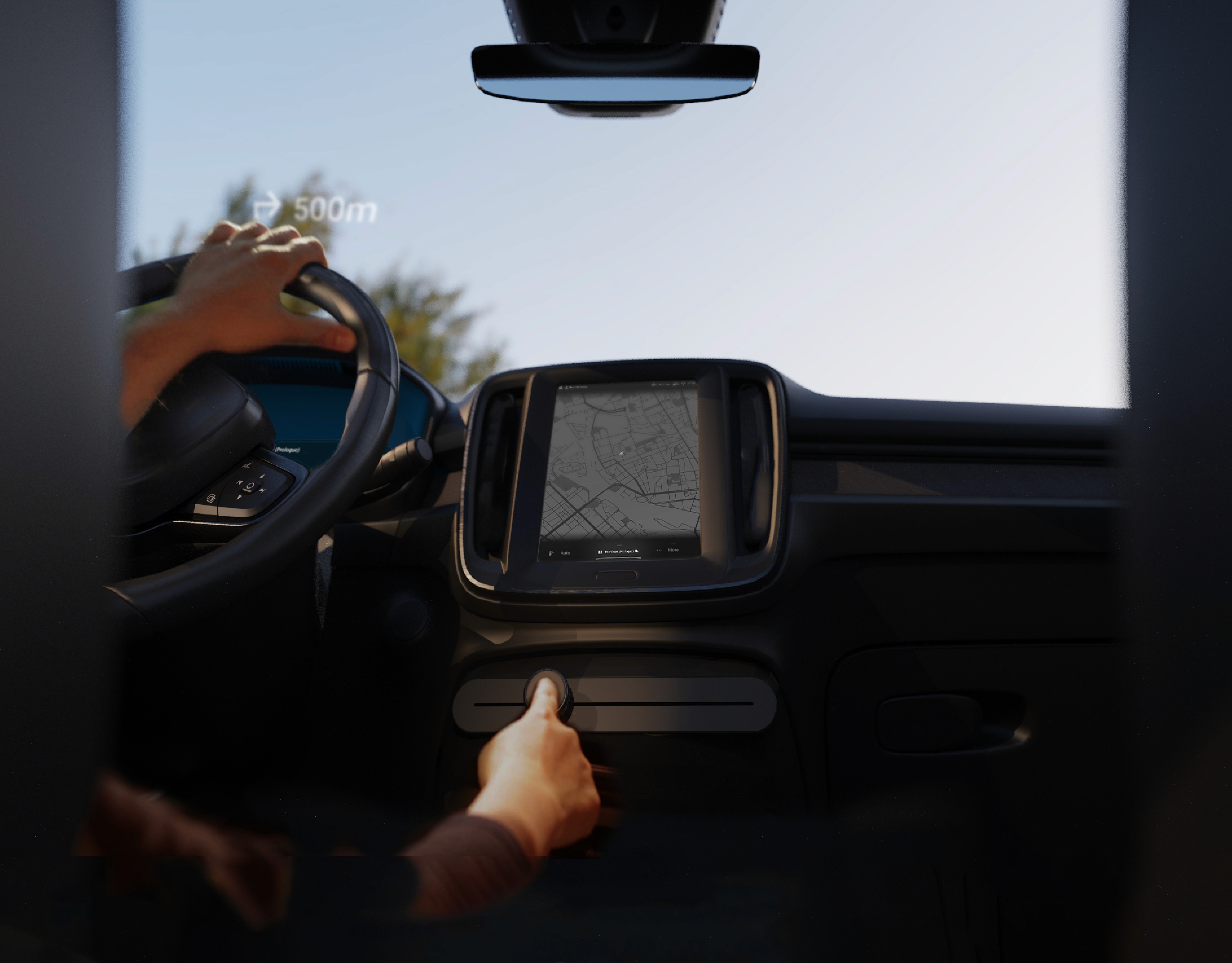
Horizon is an interactive system designed to provide a more natural car-driver interaction by employing human intuitions to control the infotainment system in your car. It enables contextual interactions and helps drivers focus on primary driving tasks while keeping their eyes on the road.
Horizon simplifies the interactions, reducing cognitive burden and clutter of controls within the car system. It also allows users to optimise the time in between their destination and makes their time spent in the car a meaningful experience. With Horizon, driving can become a personal space and an enjoyable experience, even during the busiest of days.
Naturalness in car-driver interaction
Brief for MVP
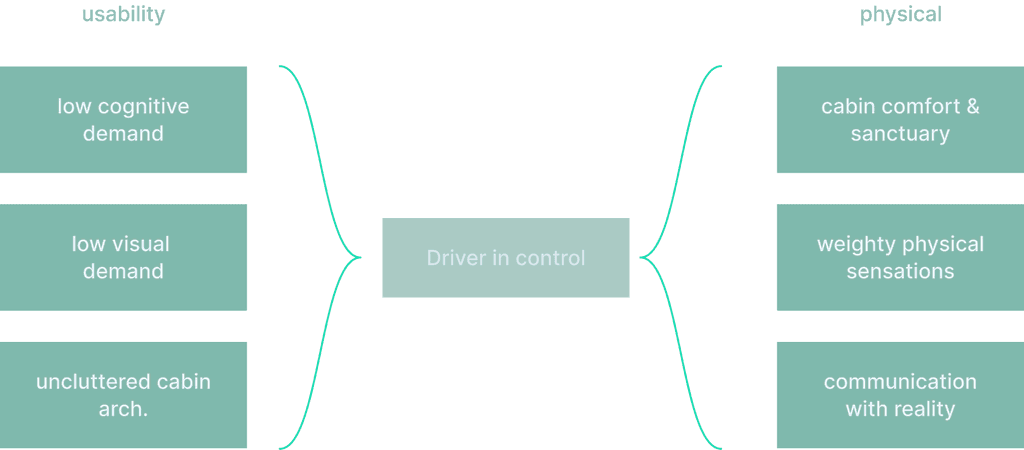
Design a contextual interaction element that minimises cognitive load and maximises driver control through a barrier-free interaction, maintaining eyes on road and focus on primary driving task.
Research Outcomes
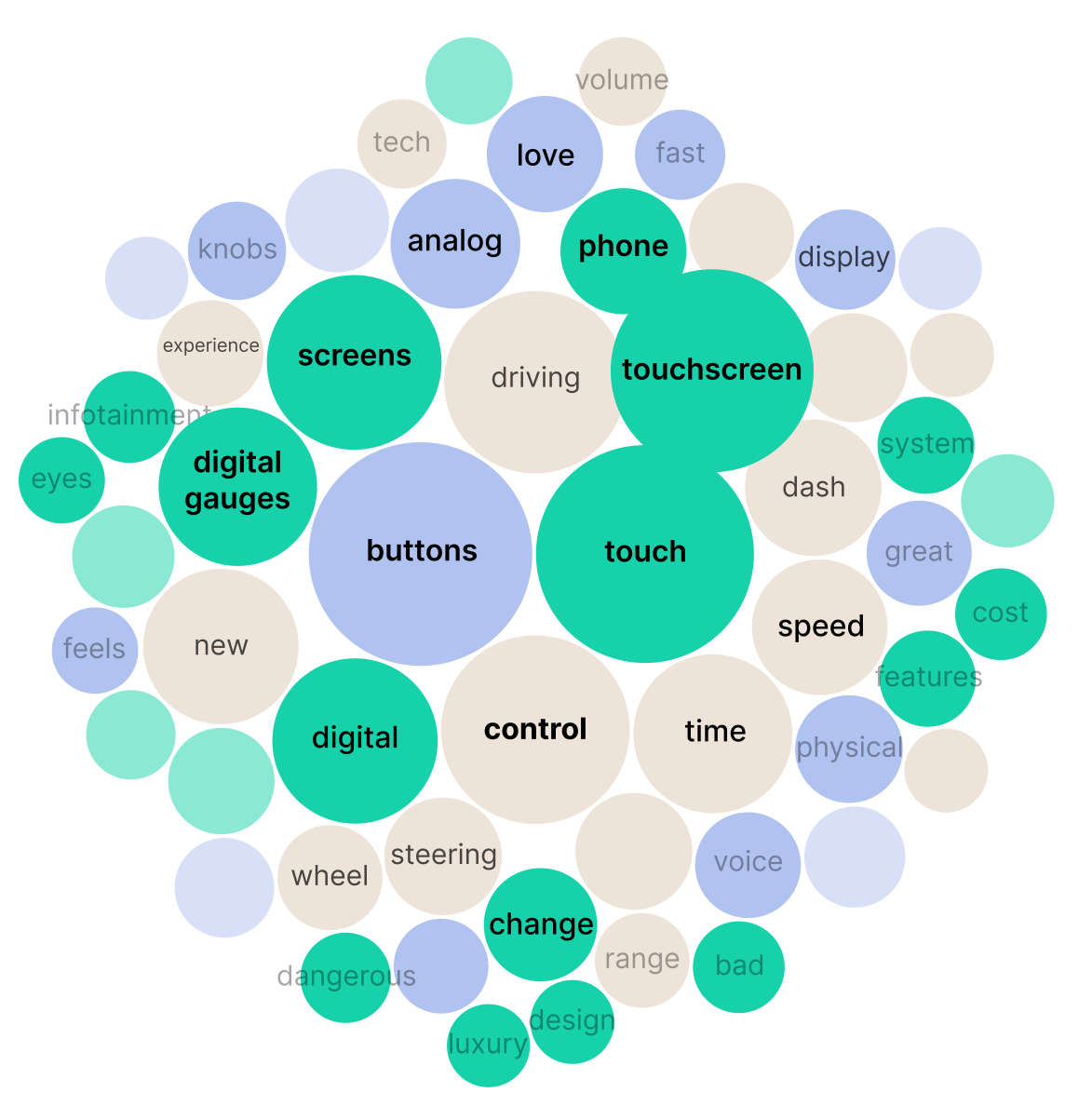
Apart from scrapping literature and understanding "naturalness in interaction" we did in depth UX research through digital ethnography in order to identify problem areas between primary and secondary controls of the cars. This helped us limit our research and work to secondary controls from here onwards.
Positive
Neutral
Negative
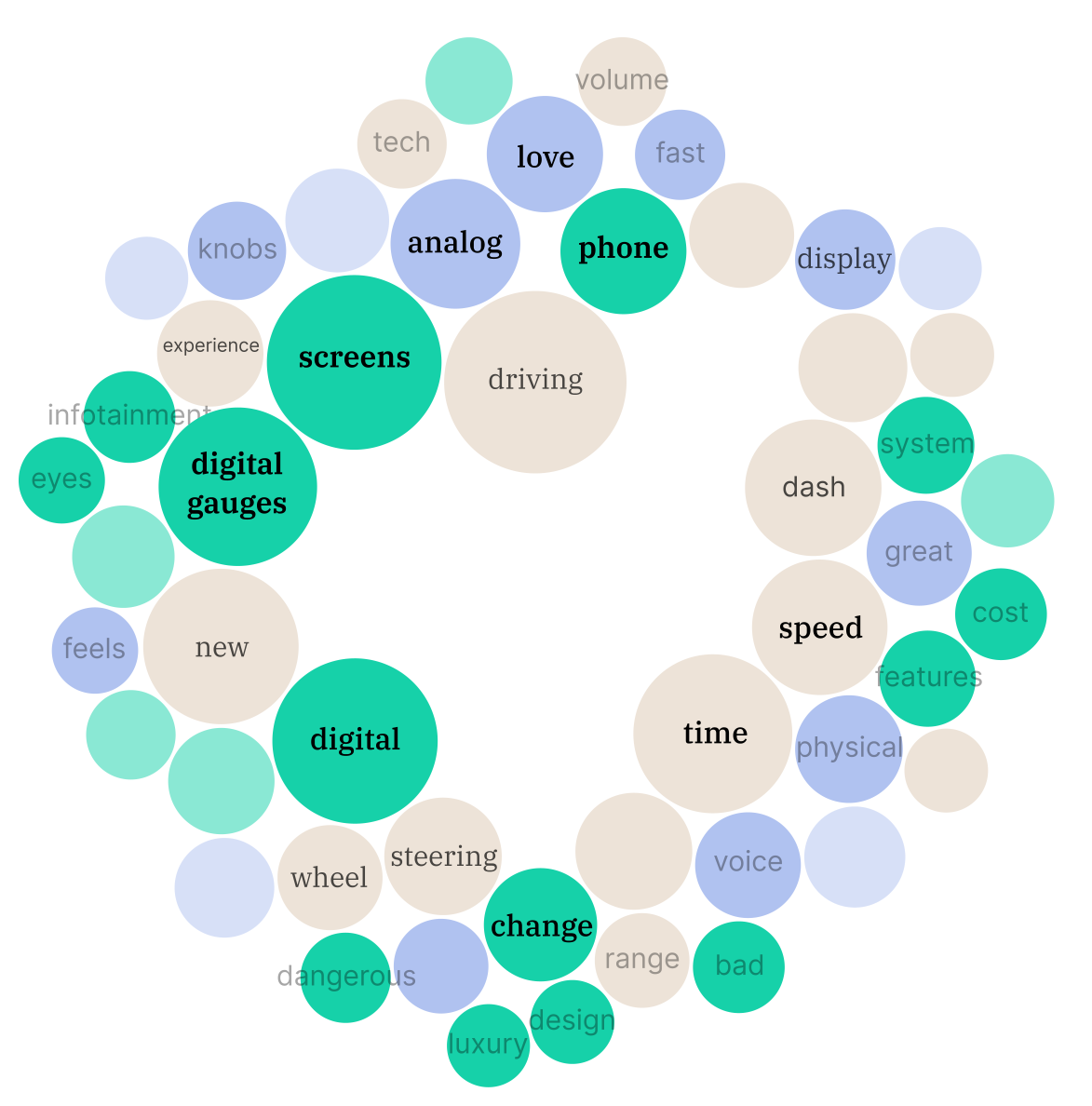
Set of interviews with drivers helped us identify our user pains that required attention which mostly revolved around lack of naturalness in controlling the infotainment system. Moreover, field tests and empathy mapping also converged our findings and acknowledged the hypothesis of the initial research.
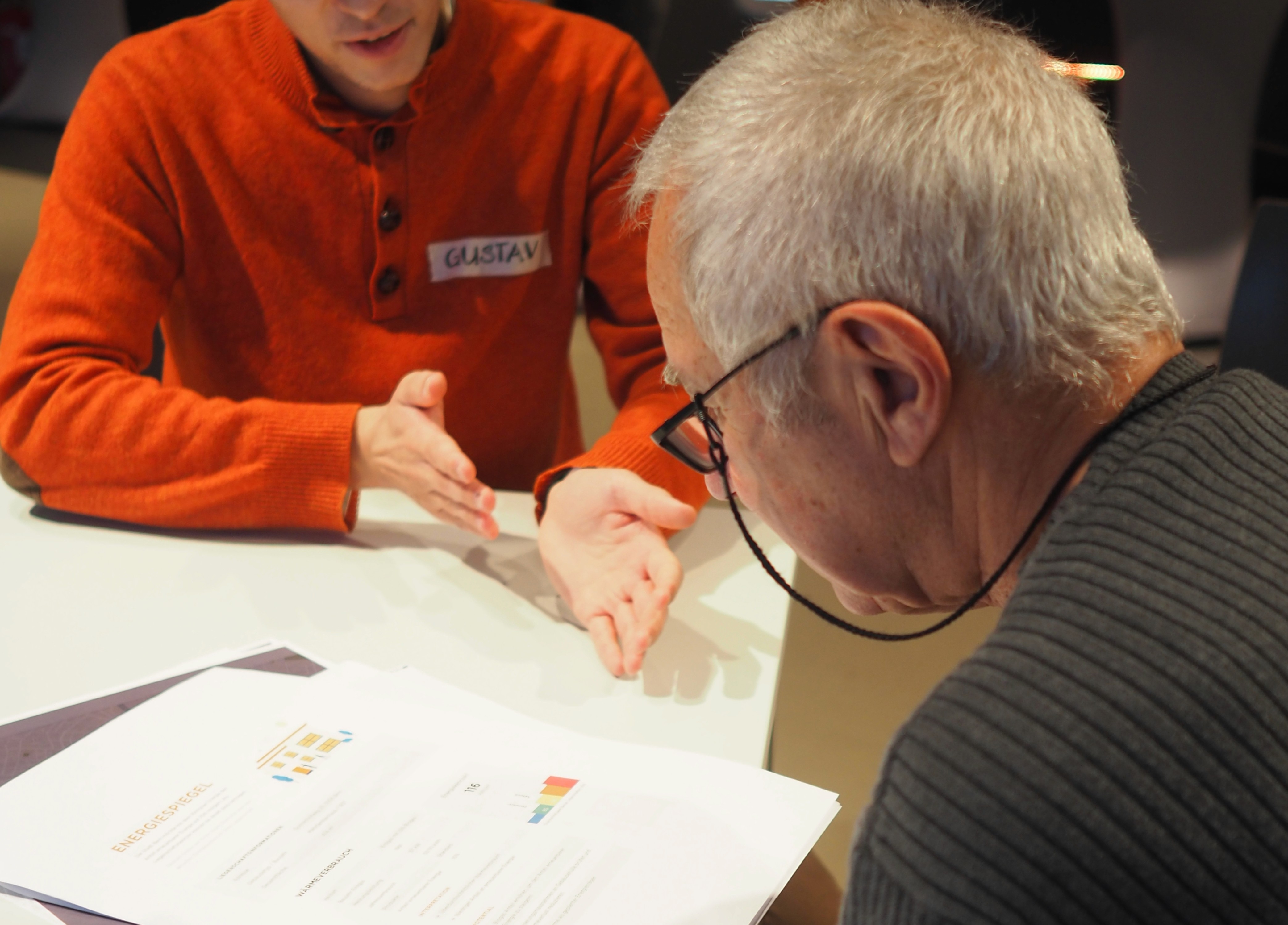
Interviews with drivers having 10-15 years experience
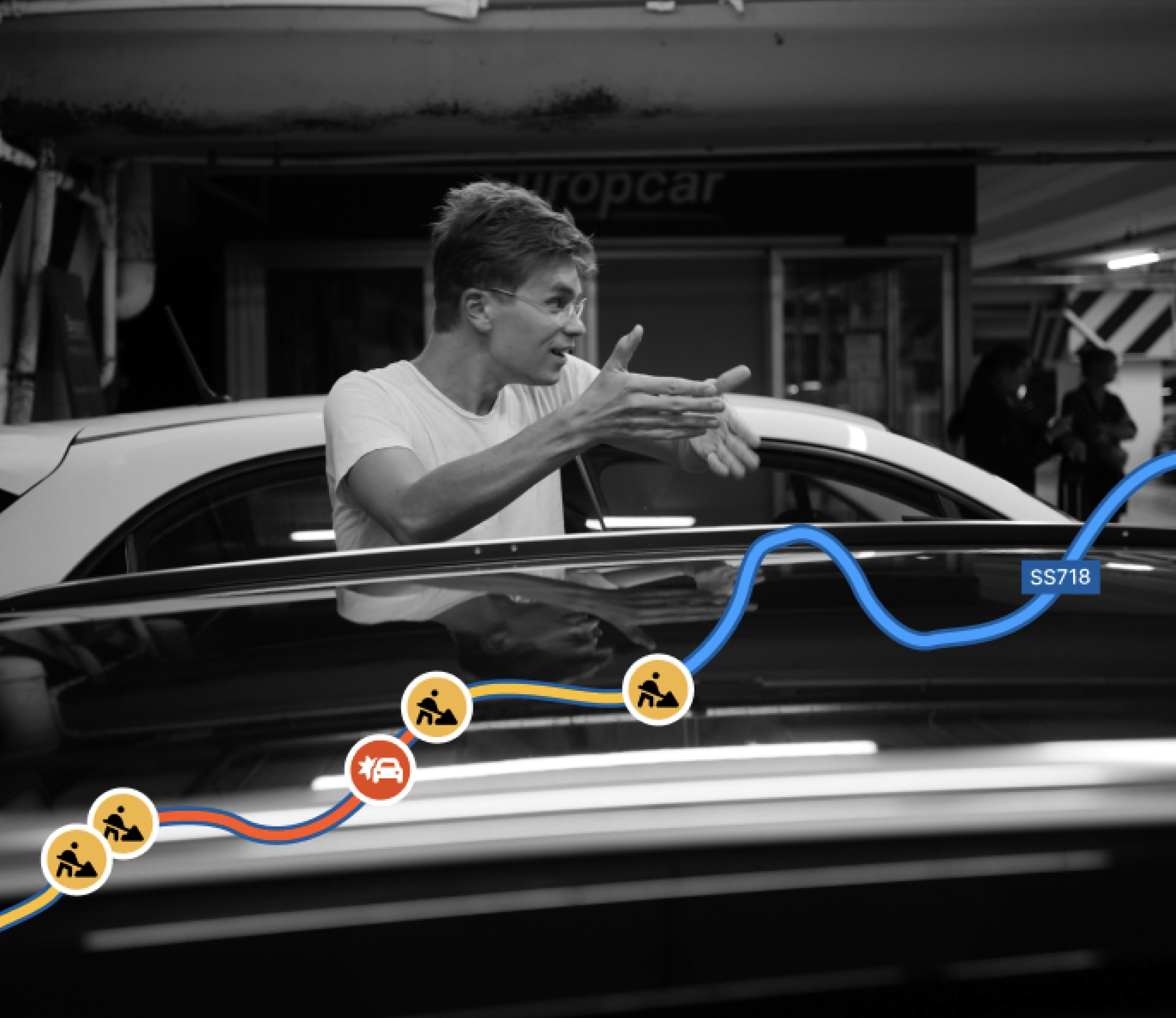
Empathy gathering 1000 km in a 2022 Audi A4 Avant
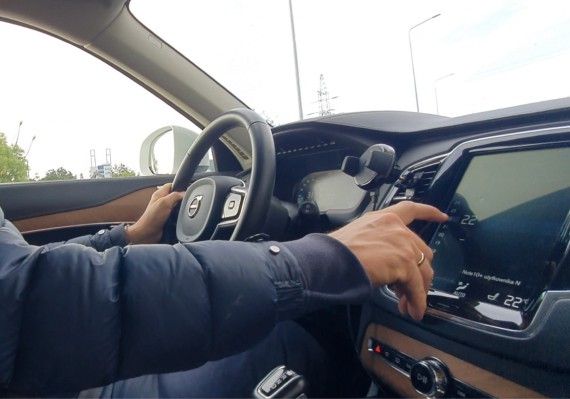
Field tests of driving in city with various tests focusing on infotainment tasks
Lack of Control
include the driver in the decision making processes
Clutter of controls
provide contextual interactions and reduce cognitive burden
Feeling of tangible
interaction
reduce driver distractions, keep eyes on road
Discovery of Value
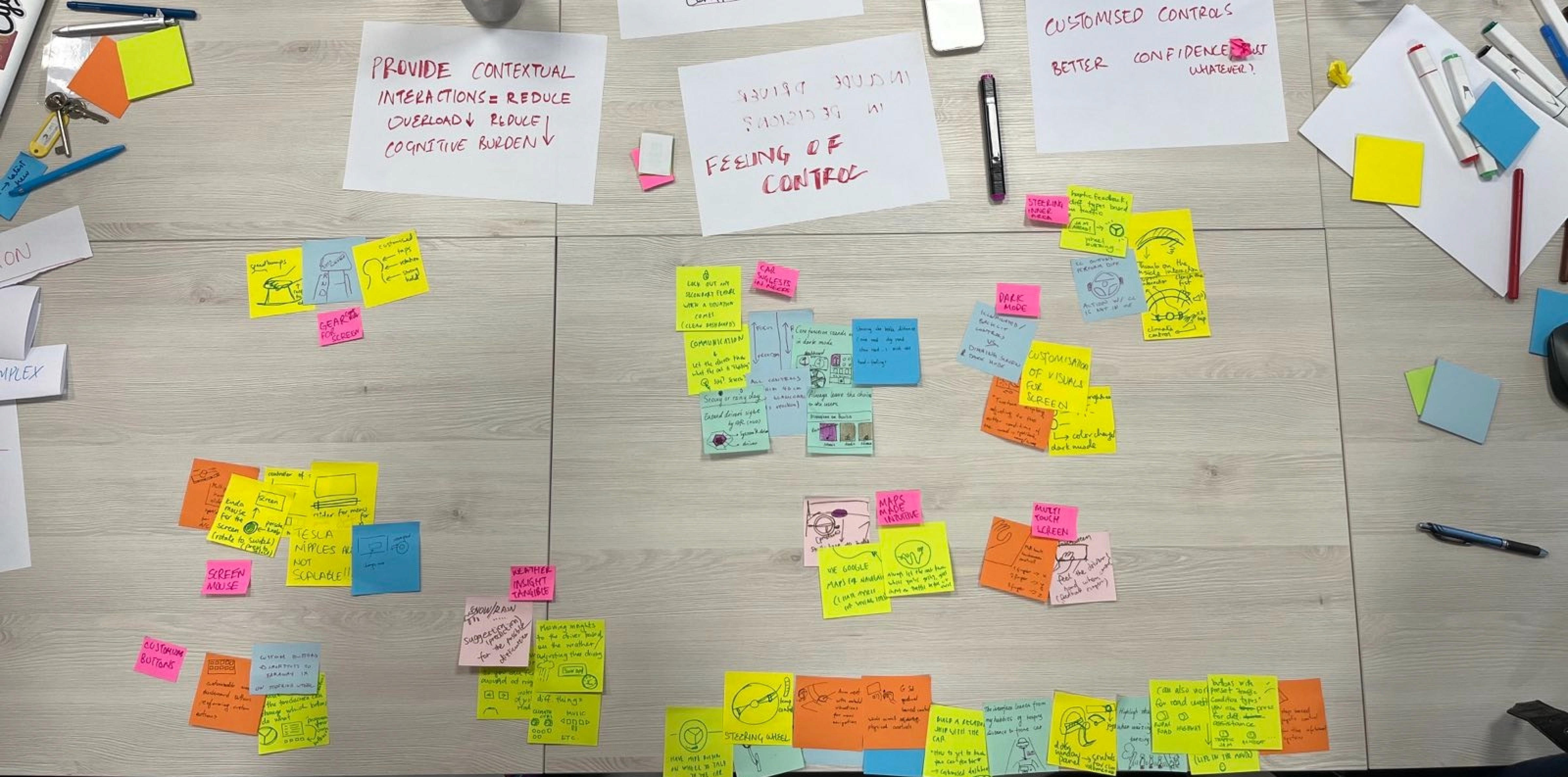
Understanding current market trends and user needs and pains the goal at this stage was to find the perfect balance with our solution. Therefore, we started by analysing various existing infotainment systems and the placement of controls in current car designs.


Extraction
While designing functionality, feasibility and realistic implementation of the solution we also aim to define the meaning of our solution in a drivers everyday life. For this purpose, we deconstructed each part of the interaction, highlight the experience our user will have during that particular interaction and reflect on the corresponding meaning of the experience.
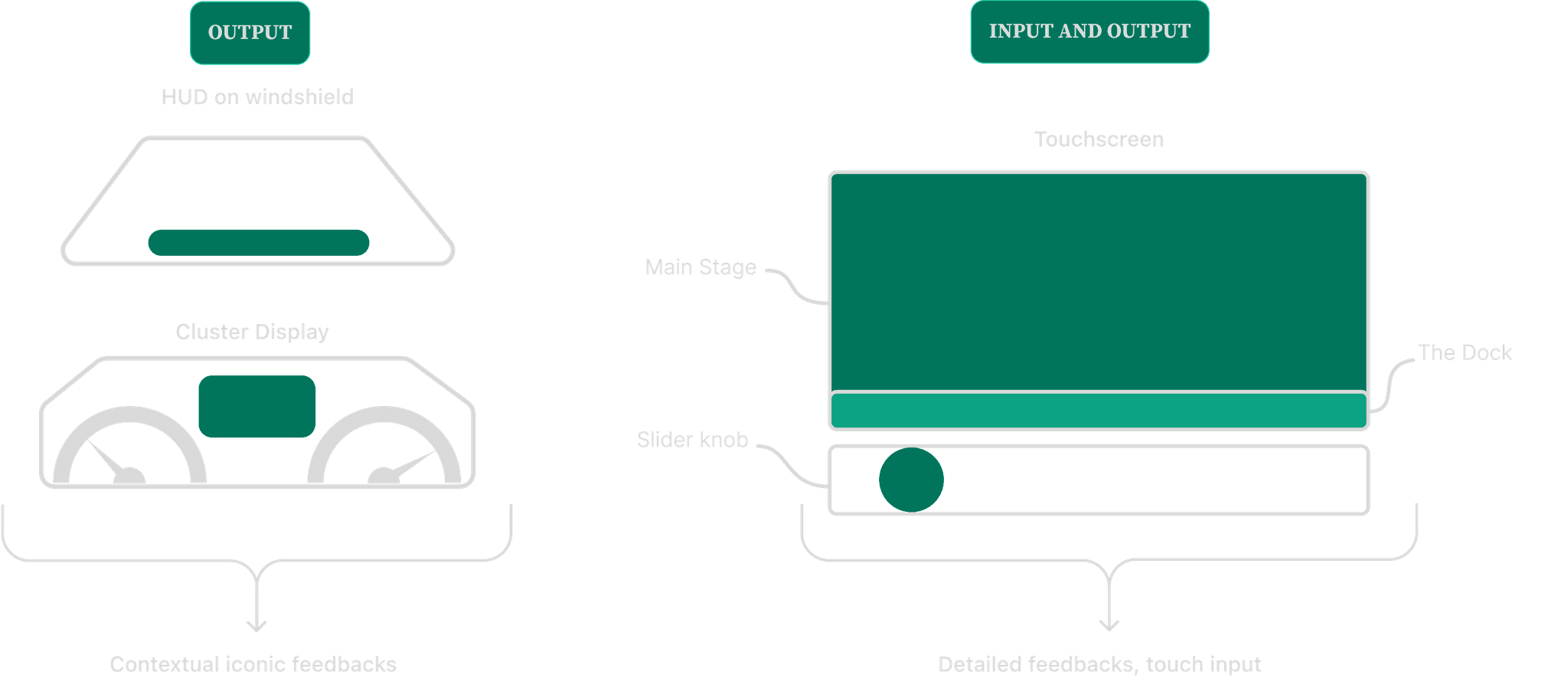
Naturalness in car-driver interaction
contextual interactions
minimise cognitive load
maximise driver control
employ muscle memory
facilitate focus and comfort
Concept testing
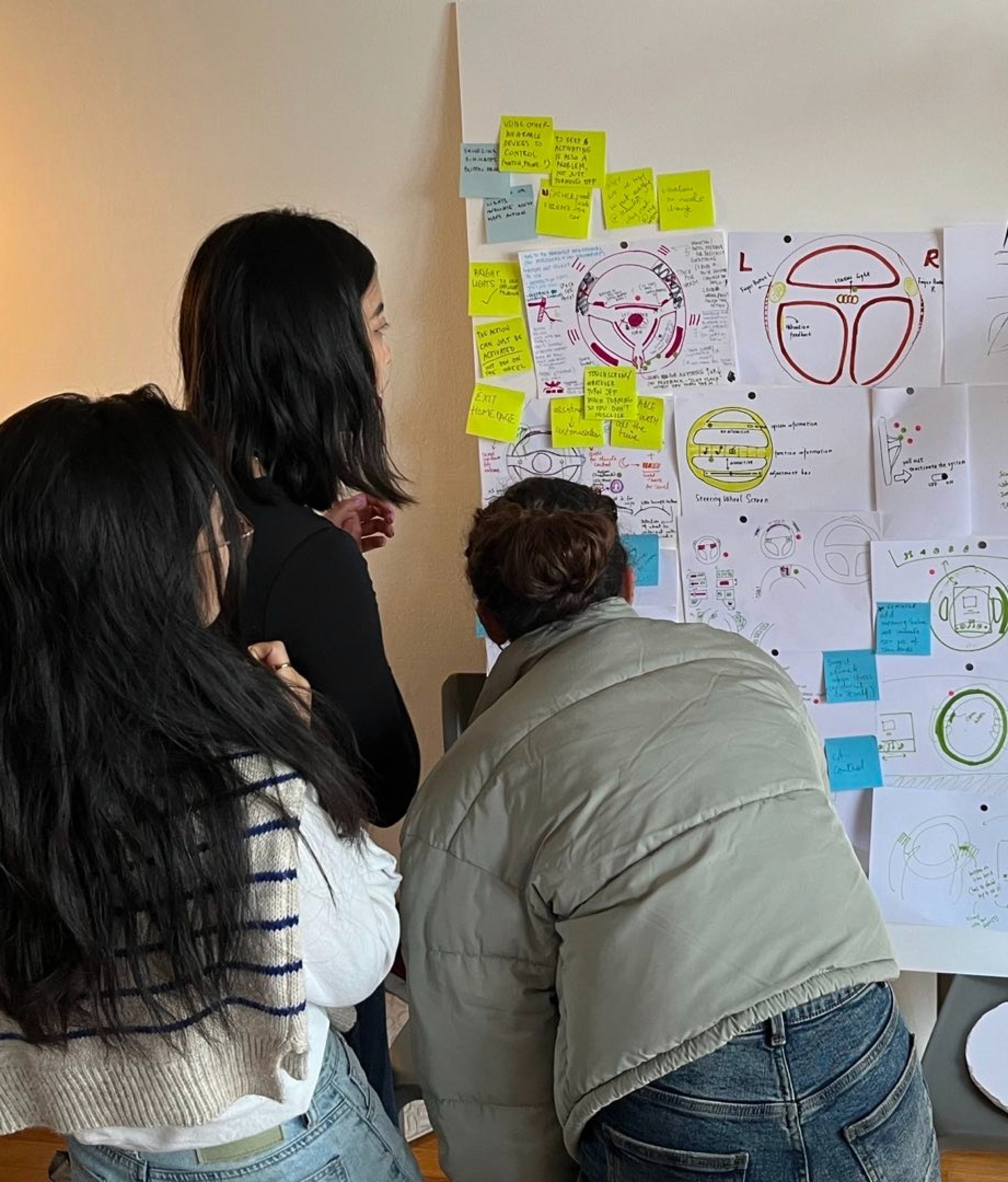
Working in an agile way we designed various concepts to pitch starting from selection of concepts within our group to later converging concepts based on peer feedbacks. Eventually we iterated various versions and started testing the interaction of the proposed solution with appropriate users.
Technical specifications
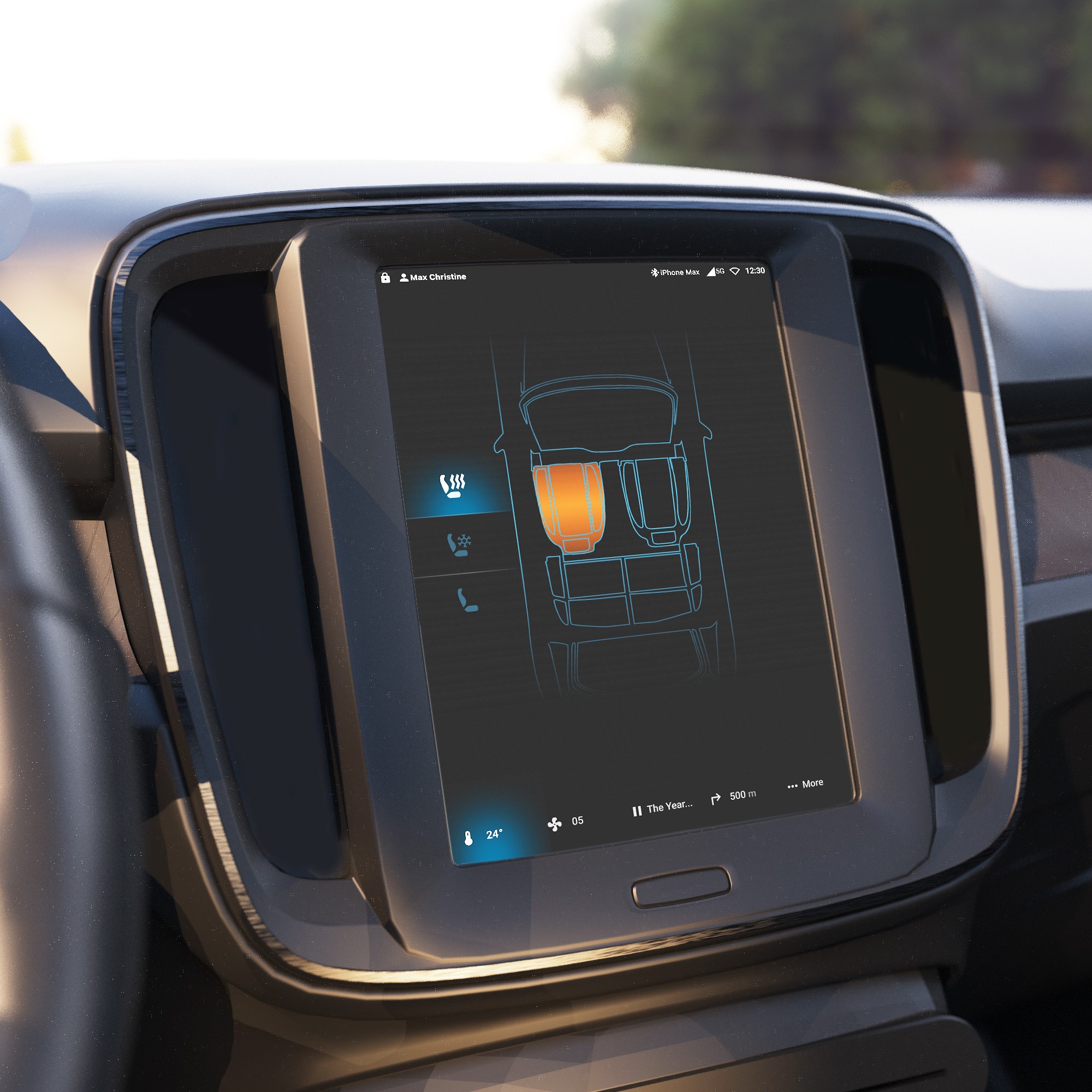
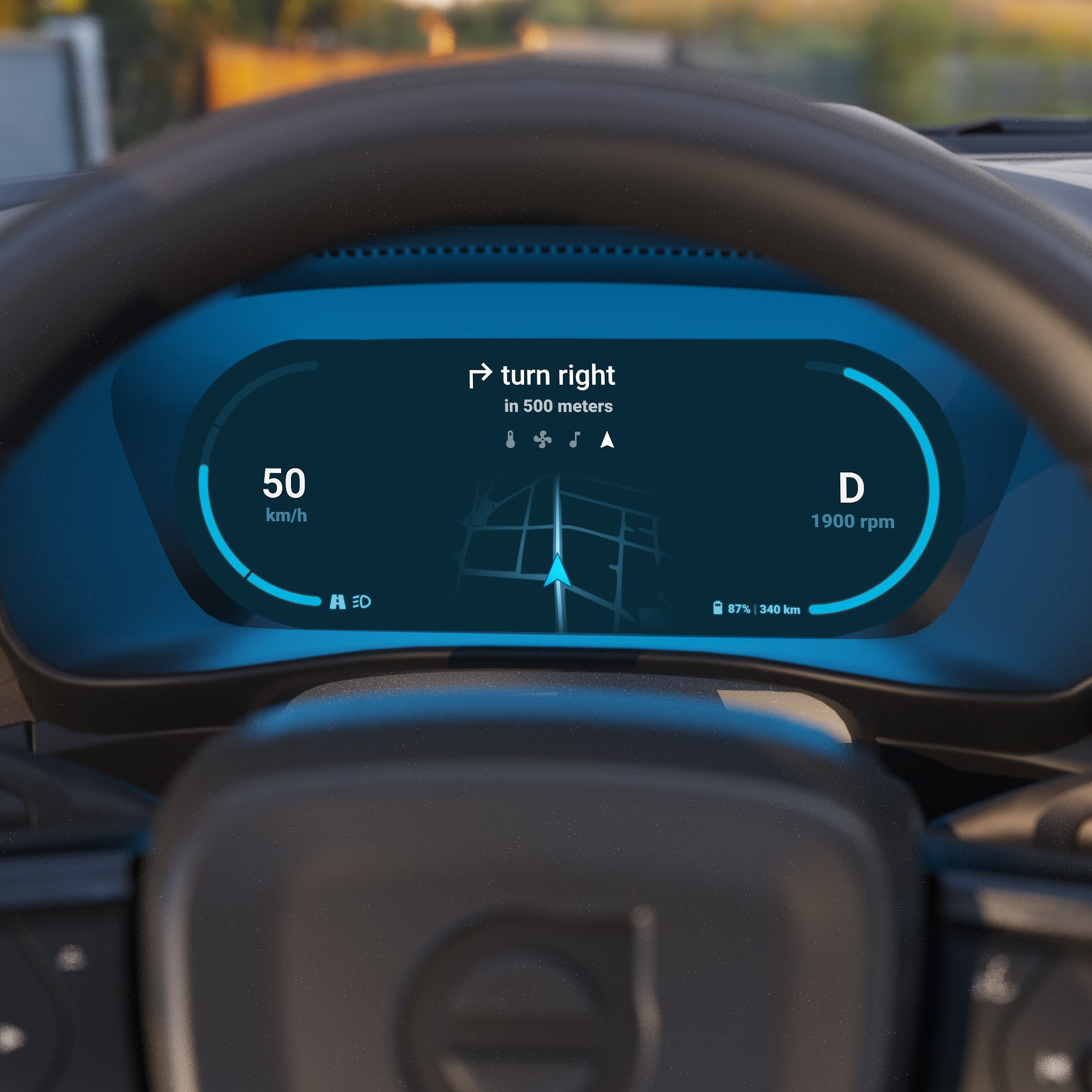
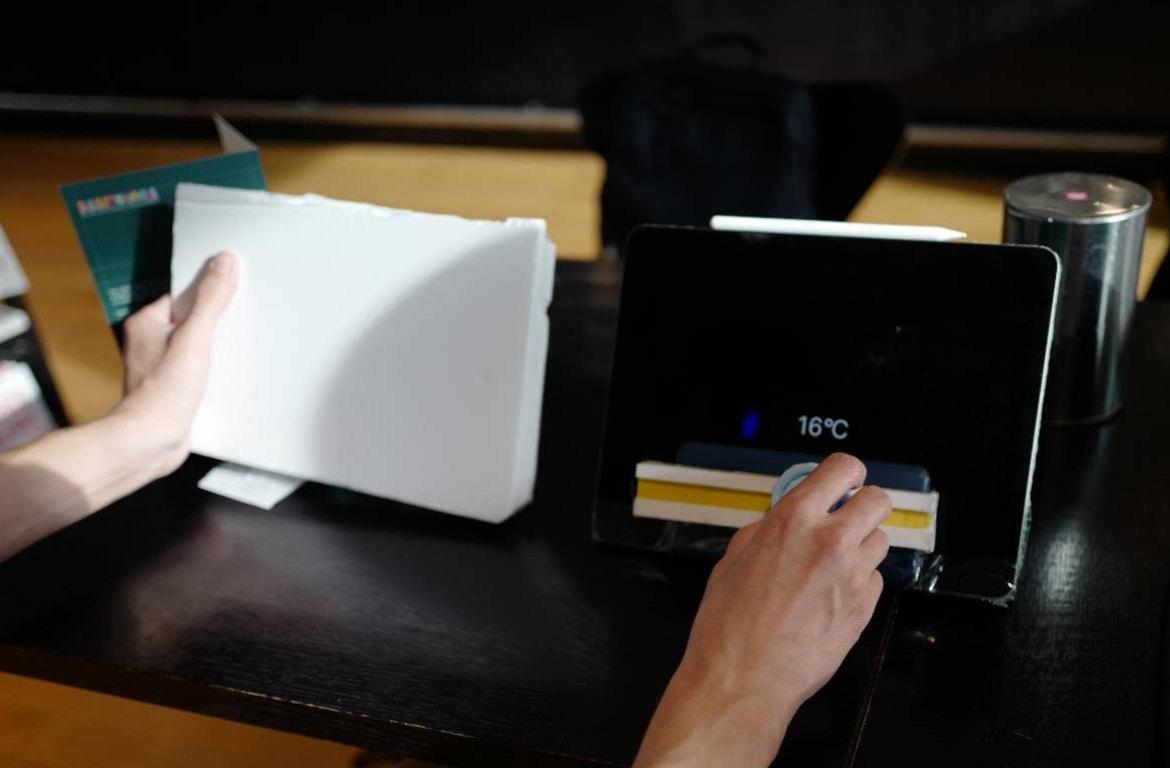
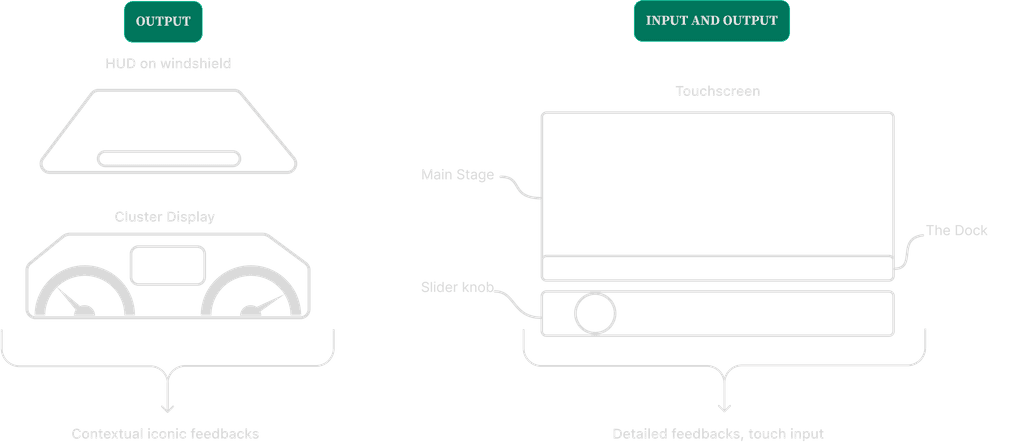
Horizon is an interactive system consisting of digital and physical controls for secondary infotainment system. The digital aspects contain the cluster display, the centre stack display and the HUD display. Whereas, the physical control is the slider knob.
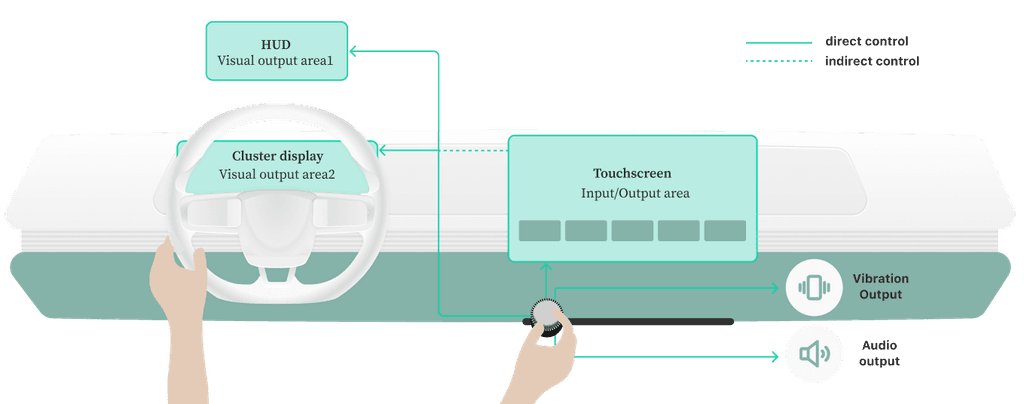
MVP Testing
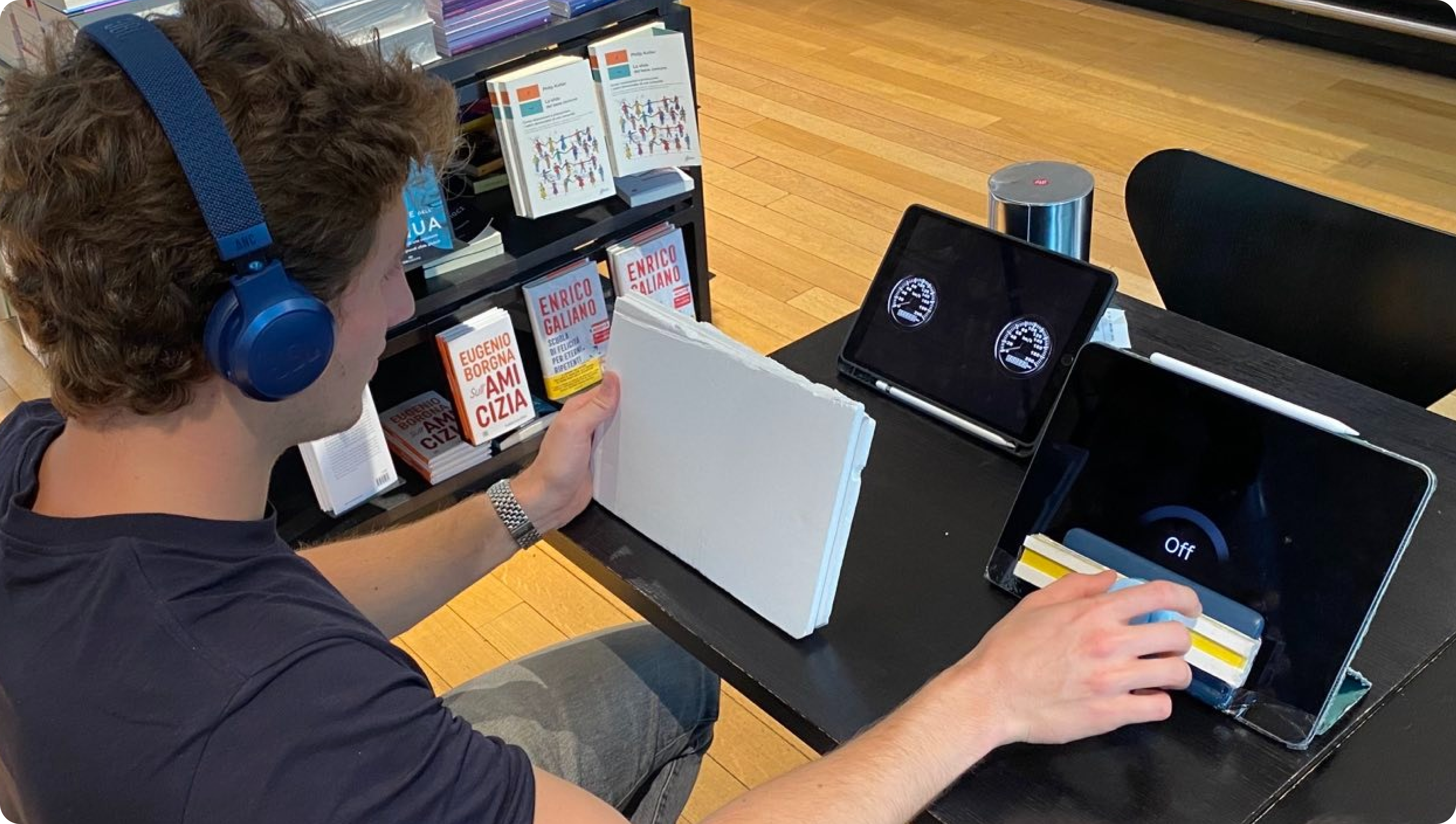
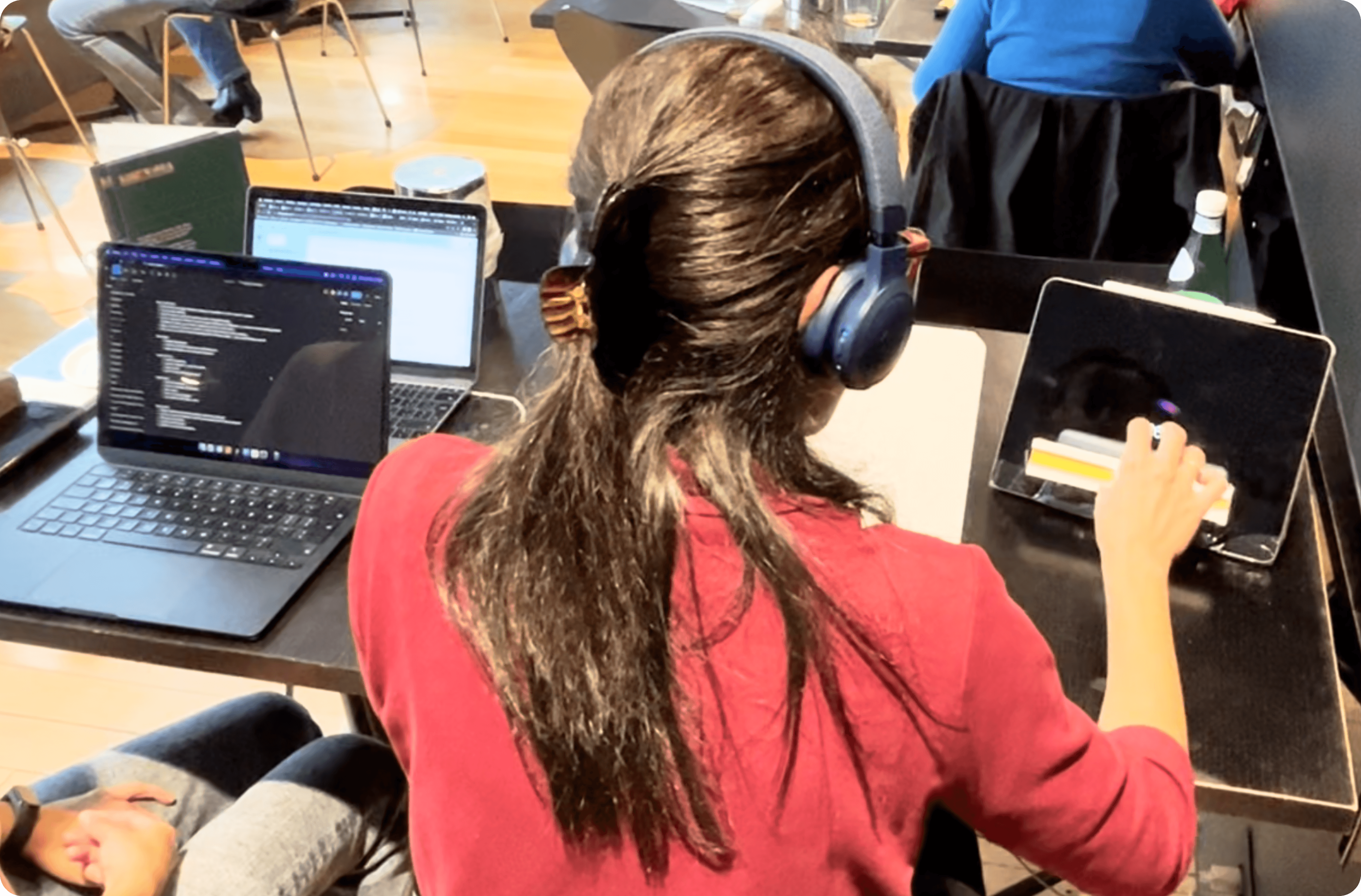
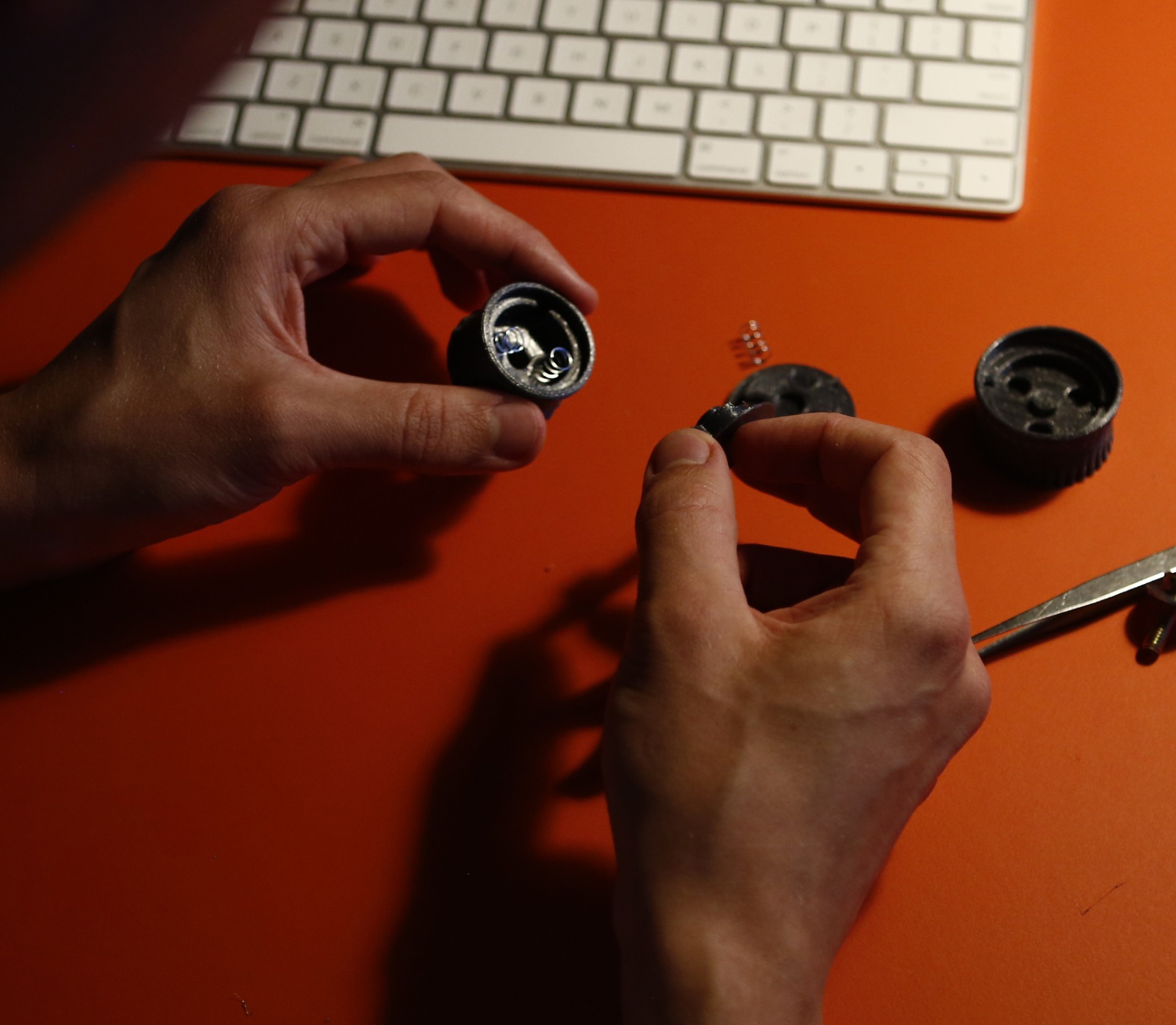
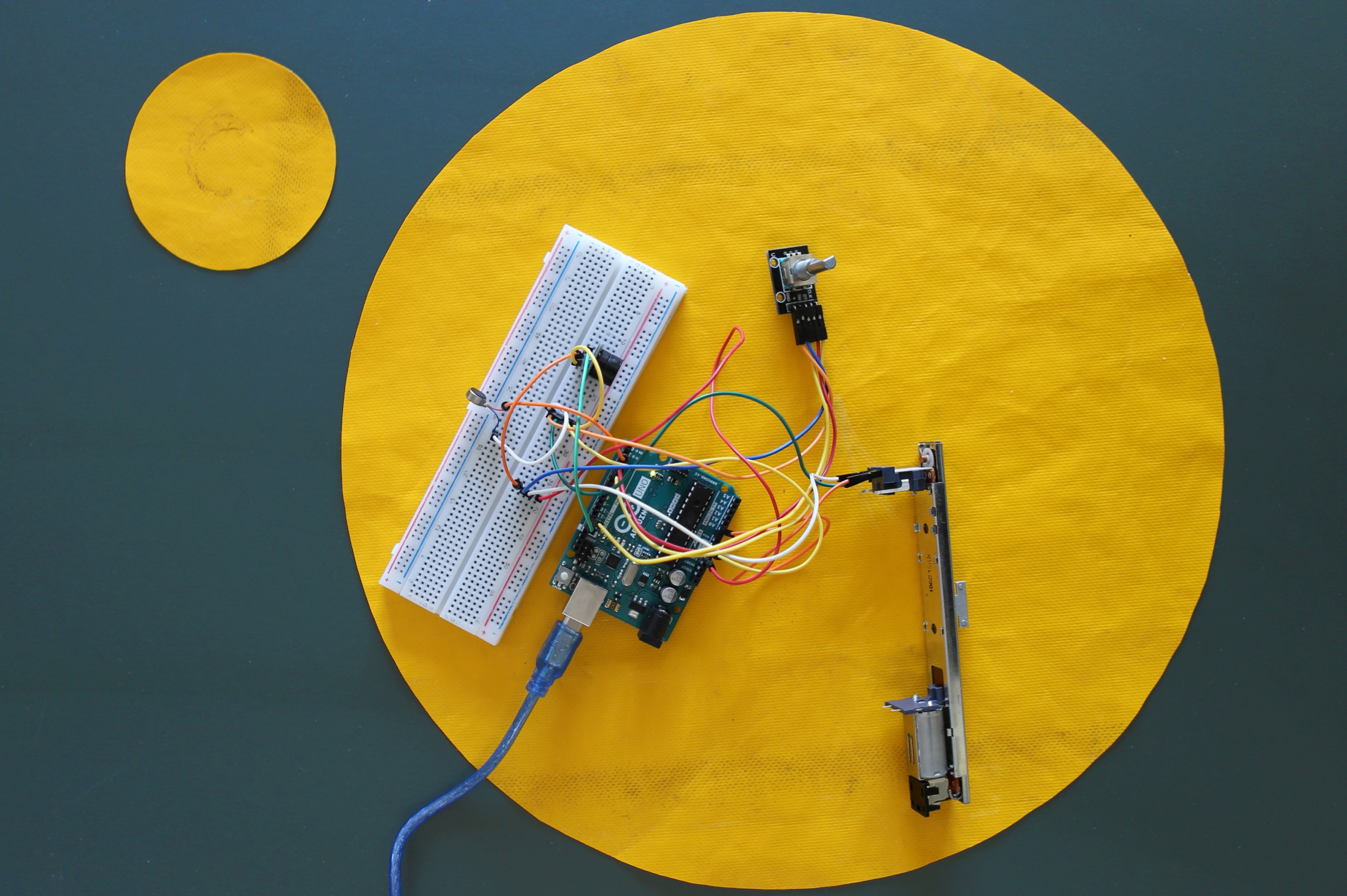
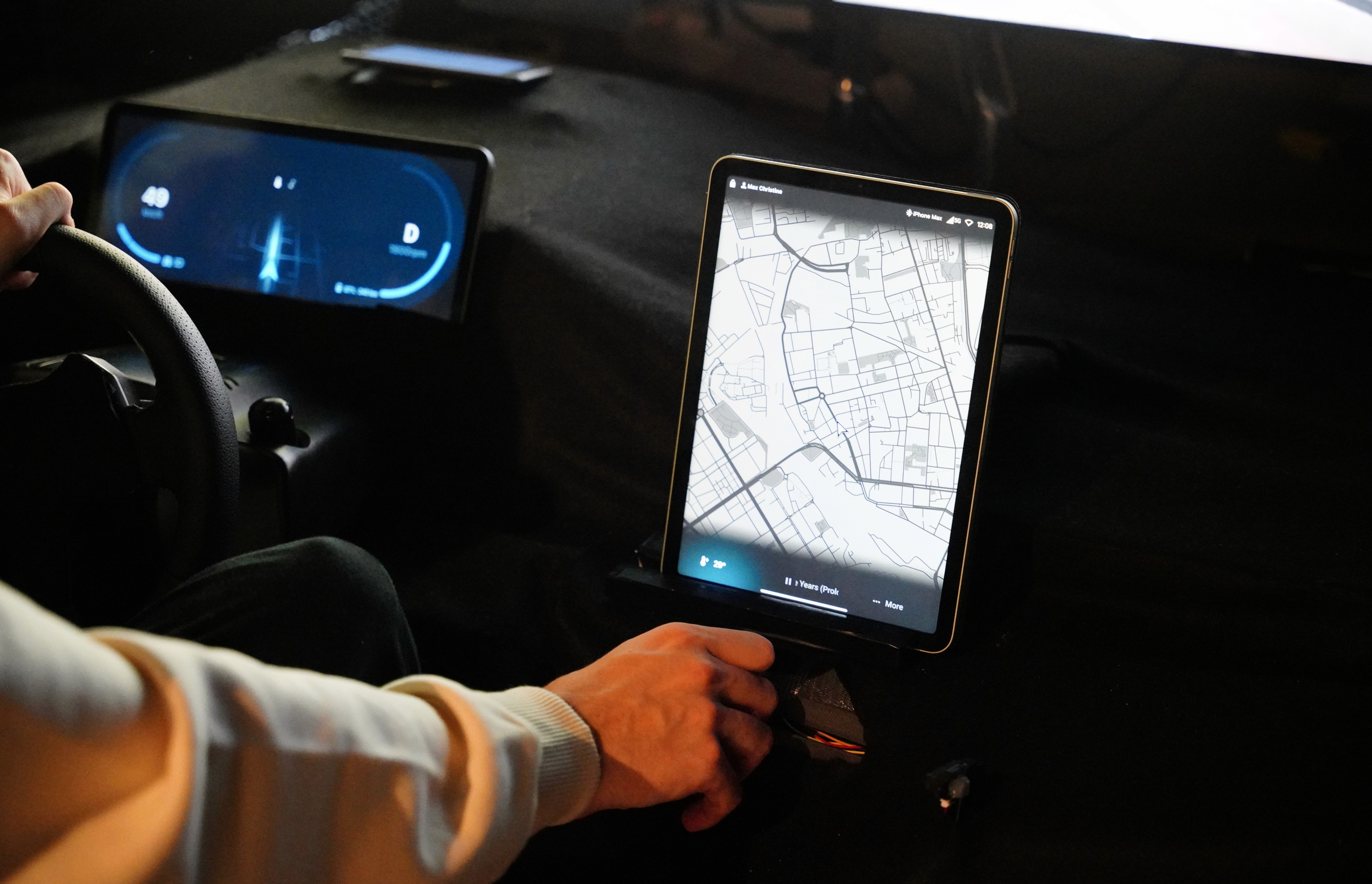
To achieve the prototype, the team chose Protopie as a bridge to connect physical part (knob system) and digital part (screen system). For the screen system, three devices are prototyped as displays in car. For the knob system, different electronic components are programmed accordingly to the functions and interactions of the system using arduino, slide potentiometer, sharp sensor, vibration motor and ipad/iphone screens as displays.
Field Testing
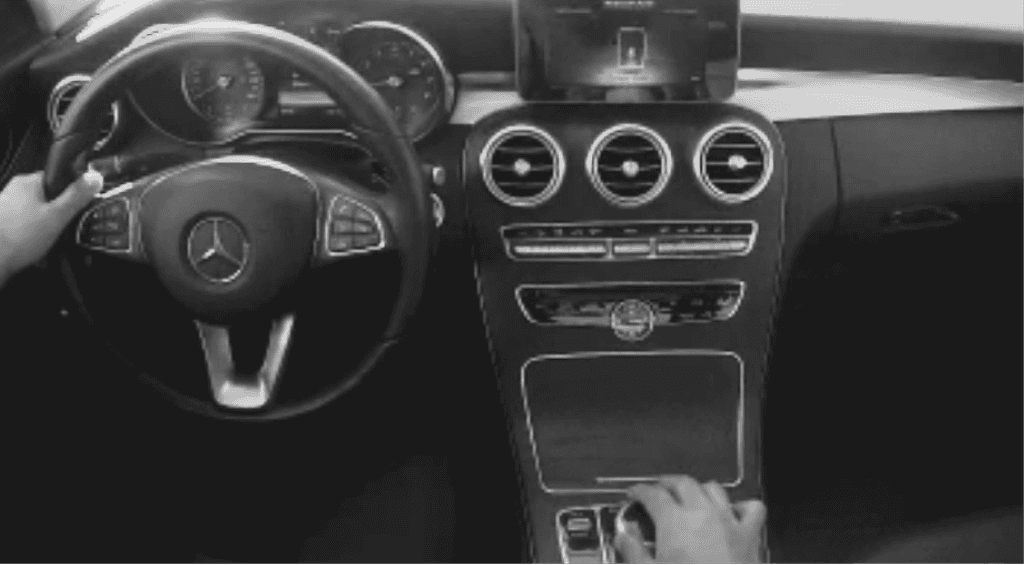
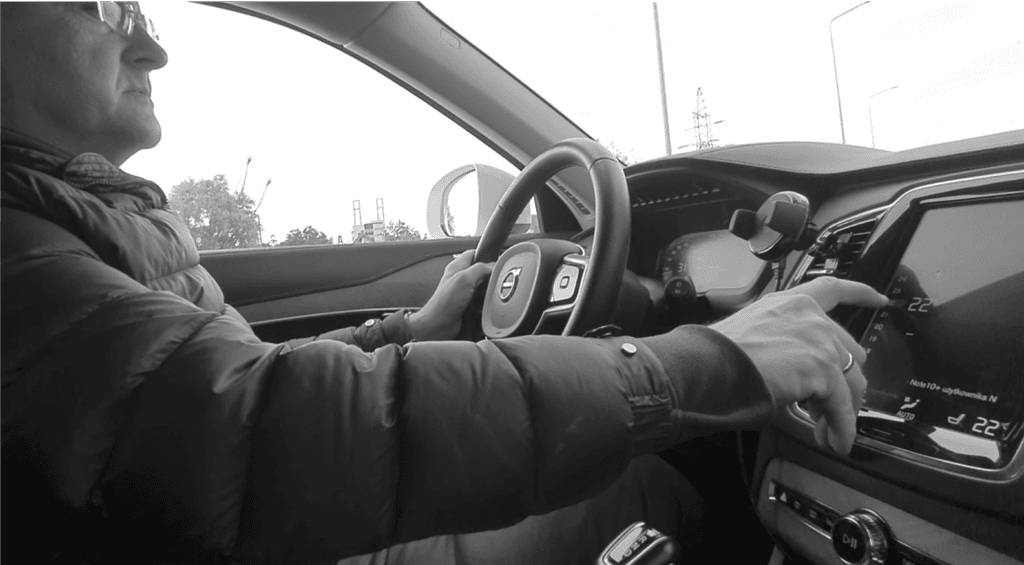
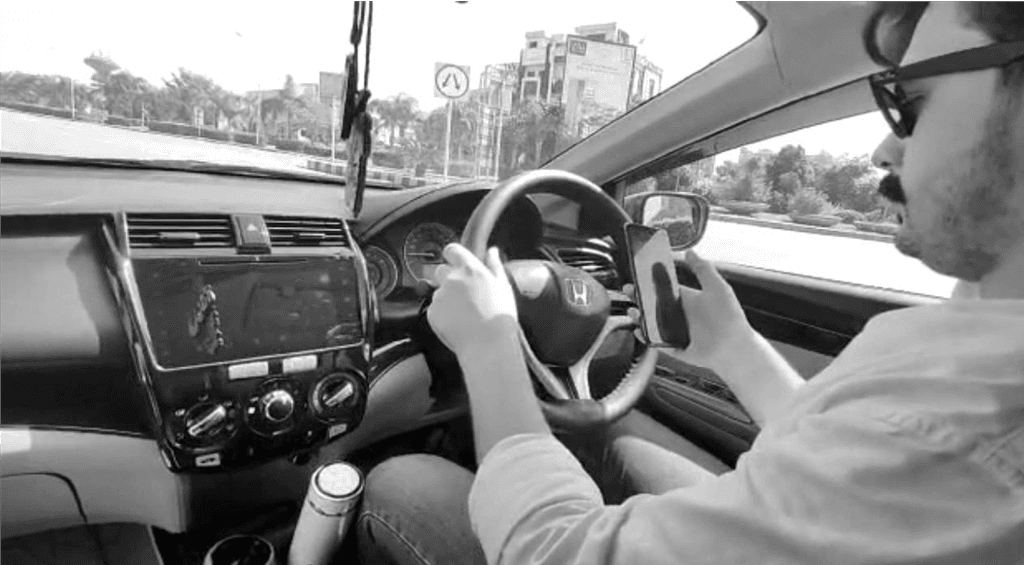
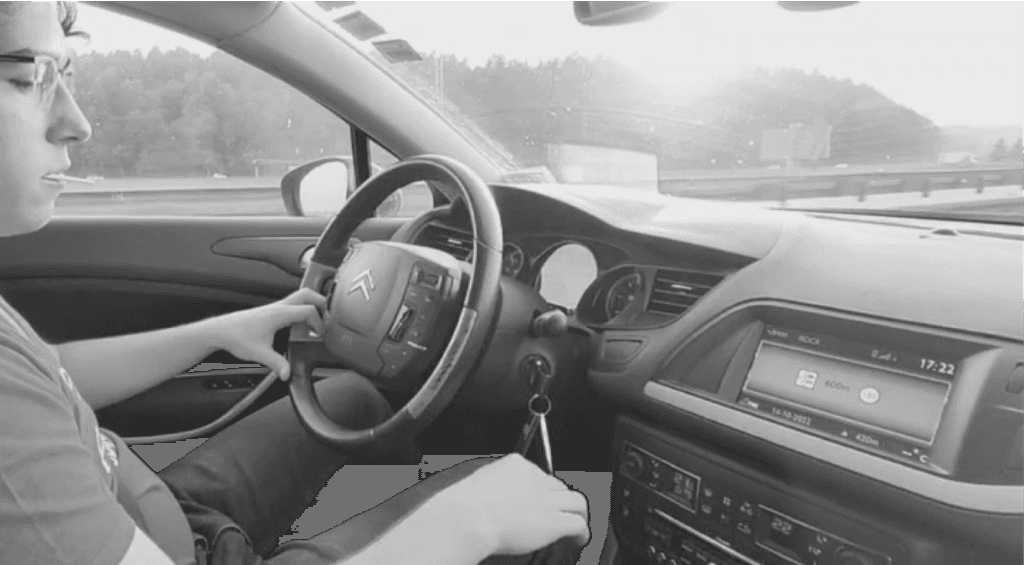
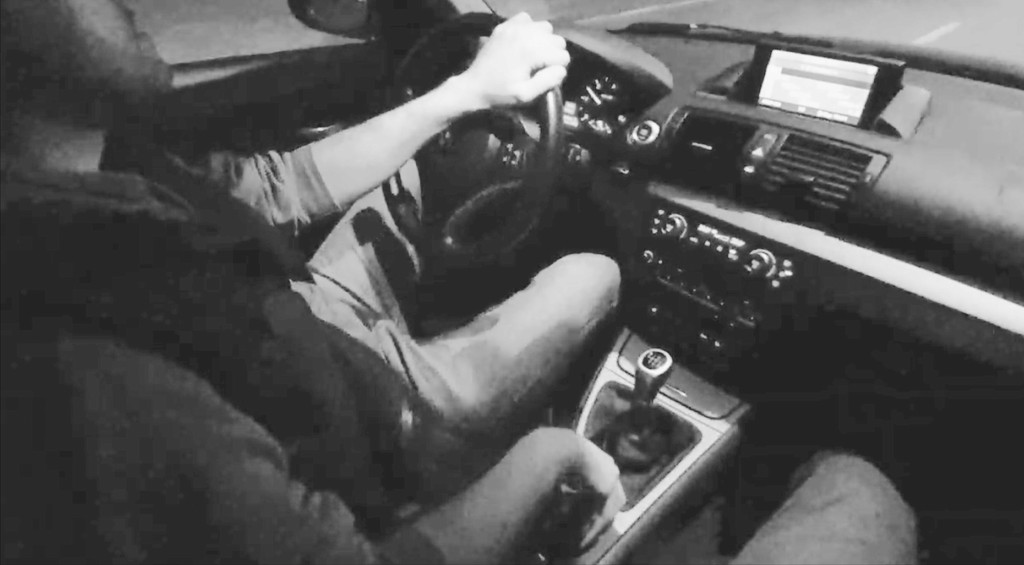
Yes the team went back to investigating on user research ! This time to empathise with the user in their comfort driving situation of different scenarios (night and day), different contexts (highway and local everyday tasks) and different placements of infotainment controls (steering wheel, gearbox controls, master display controls).
Interface design
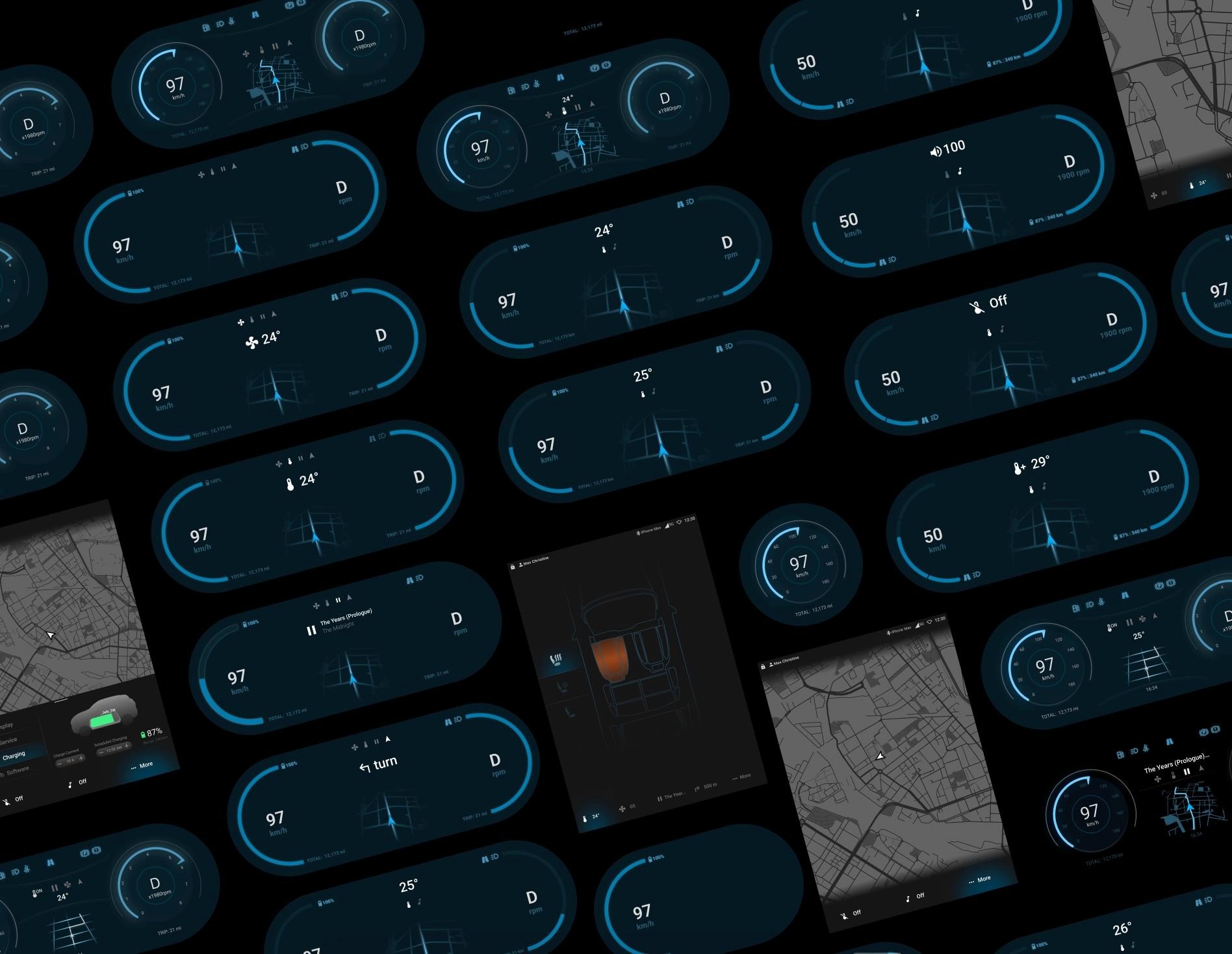
With tested hypothesis of placement and context we designed the interface of cluster screen, centre stack display and HUD with the aim of providing clear and minimal instructions to the driver to maintain focus on road.
Explore more
Visit horiz.one . Read through the process in detail including the in depth understanding of the process, technology, system details, concept and problem solving techniques.
View other works
Let's work together!